Suburban Plumbing Blog
Plumbing Articles from Orange County, CA.
Shower Water Cold? 6 Causes and the Fix for Each
📅 Updated Aug 25th, 2026
Article-at-a-Glance
- The fastest diagnostic is one test: if sinks run hot while the shower stays cold, the problem is the shower mixing valve, and if the whole house struggles, it is the water heater.
- Six causes cover nearly every cold shower: a maxed-out tank, sediment buildup, a worn mixing valve, a low thermostat setting, a broken dip tube, or a failing water heater.
- A shower that swings hot and cold when a toilet flushes points at the mixing valve’s pressure balance, one of the most common and most fixable causes on the list.
- The safe thermostat setting is 120 degrees Fahrenheit; turning the dial higher masks the real problem while raising scald risk sharply.
- Orange County’s hard water accelerates both sediment buildup and valve cartridge wear, which makes the annual tank flush more valuable here than almost anywhere.
- The free checks are the whole-house test, the thermostat dial, and a week of staggered usage; everything behind tile or inside the tank belongs with a licensed plumber.
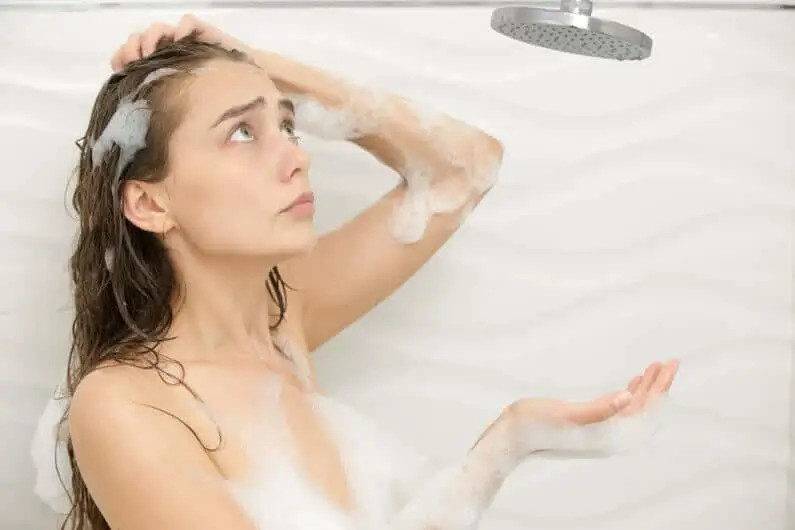
Shower water cold while the rest of the house runs hot fine? That detail is the whole diagnosis. When only the shower is cold, the problem usually lives in the shower mixing valve behind the wall, not the water heater. When every fixture struggles, the water heater is the suspect: a maxed-out tank, sediment buildup, a thermostat set too low, a broken dip tube, or a unit at the end of its life. This guide walks through all six causes in order of likelihood, the symptom fingerprint that identifies each, and which fixes are honestly yours to try.
Start Here: Is It One Fixture or the Whole House?
Before touching anything about your shower water cold problem, run the hot tap at a sink on the far side of the house and give it a full minute. This single test splits the six causes into two families and saves most people an hour of guessing.
If the sink gets properly hot while your shower water stays cold, your water heater is doing its job and the problem sits between the wall and your shower head, which almost always means the shower mixing valve. Skip straight to that section. If the sink runs cold or lukewarm too, or the whole house runs out of hot water early, the water heater side of this guide is your territory: capacity, sediment, thermostat, dip tube, or a failing unit.
Everything below is organized around that fork, because the fastest path to a hot shower is knowing which half of the plumbing to interrogate.
Cause 1: Your Water Heater Is Maxed Out
The most common reason a household runs out of hot water, and finds the shower water cold mid-shampoo, is arithmetic, not equipment failure. A standard tank holds a fixed number of hot gallons, the modern morning spends them fast, and the last person showering runs out of hot water on schedule. When the shower goes cold ten minutes after the dishwasher started and someone else just finished bathing, the tank is not broken, it is empty.
Where the Hot Gallons Go
Set those numbers against a 40-gallon tank and the mystery evaporates: two back-to-back showers alone can outrun it before the laundry even starts, and the third person in line finds the household runs out of hot water entirely.
The fingerprint of this cause is timing: shower water cold partway through, hot water that starts strong and runs out of hot water before the household is done, worst when the household is busiest, fine at 2 PM on a Tuesday. The free fix is staggering: space the showers, run laundry at night, and the same tank suddenly keeps up. If your family has genuinely outgrown the tank, the durable fix is capacity, a larger tank or a tankless conversion, and that is a sizing conversation rather than a repair.
Cause 2: Sediment Is Stealing Your Capacity
Orange County water carries dissolved minerals, and every gallon your heater warms leaves a little of them behind. Over years, that sediment settles into a layer at the bottom of the tank, exactly where a gas burner does its work. The layer insulates the water from the flame, slows recovery, and physically occupies gallons your tank is supposed to hold.
That is why a ten-year-old 50-gallon heater behaves like a 35-gallon one, and why sediment leaves so many households with shower water cold before the second person finishes rinsing.
The fingerprint here is gradual decline plus sound effects: hot showers that have been getting shorter for months rather than failing overnight, and popping, rumbling, or crackling from the tank as steam bubbles fight up through the sediment layer. The fix is a professional flush if the buildup is moderate, and honest news if it is not.
A tank that has gone years without flushing can be too far gone for the procedure to recover, and flushing a heavily scaled old tank occasionally reveals leaks the sediment was plugging. A plumber who looks first and tells you which case you have is worth more than one who just sells the flush. Once the tank is healthy, an annual flush is the cheapest hot water insurance Orange County offers.
Cause 3: The Shower Mixing Valve
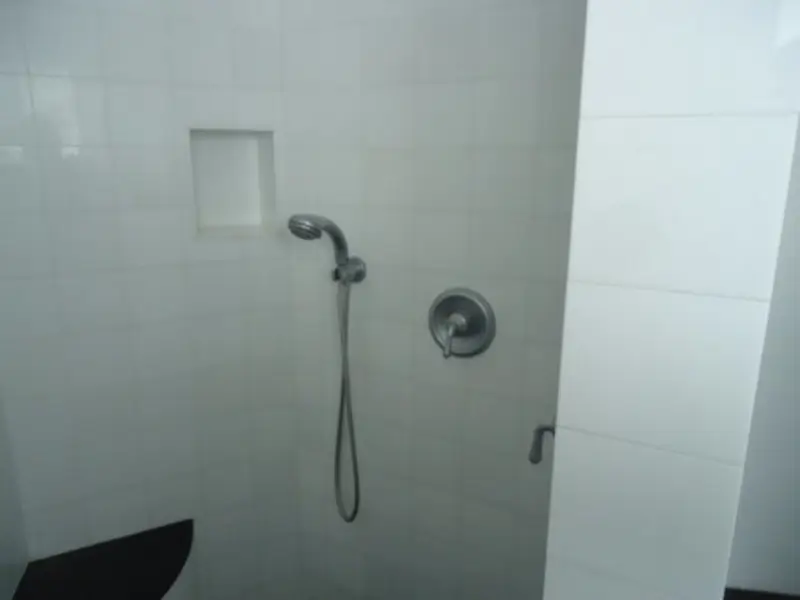
Here is the cause the water heater articles skip, and the one your whole-house test points to when every other fixture runs hot. Behind your shower handle sits a shower mixing valve, the mechanical referee that blends hot and cold to the temperature you dial in. When it wears out, the shower goes cold or lukewarm while the water heater sits full of perfectly hot water it is never allowed to deliver.
Two failures dominate. The first is the anti-scald limit stop, a safety adjustment inside most modern valves that caps how far toward hot the handle can rotate. It protects against scalding, but set too conservatively, sometimes from the factory, sometimes after a cartridge service, it caps your shower at lukewarm forever.
Adjusting the limit stop is a real fix, done with the trim off and the manufacturer’s spec in hand. The second is the cartridge itself: the internal seals and passages wear, stick, and clog with the same minerals that fill water heaters, and a worn cartridge blends badly no matter where the handle points, leaving your shower water cold with a tank full of heat behind it.
Cartridge replacement restores the shower mixing valve to new behavior for far less than anything involving the water heater, and it is one of the most satisfying fixes in plumbing: thirty minutes of skilled work and the shower is new again.
The fingerprint is specificity: no hot water in shower while every sink runs hot, or a shower that swings between scalding and cold when a toilet flushes, which points at a failing pressure-balancing function inside the same valve. Because the shower mixing valve lives behind tile and involves both safety settings and brand-specific cartridges, this is honest call-a-plumber territory, not because the part is expensive, but because the access and the calibration are where DIY attempts turn a $30 cartridge into a tile repair.
Cause 4: The Thermostat Is Set Too Low
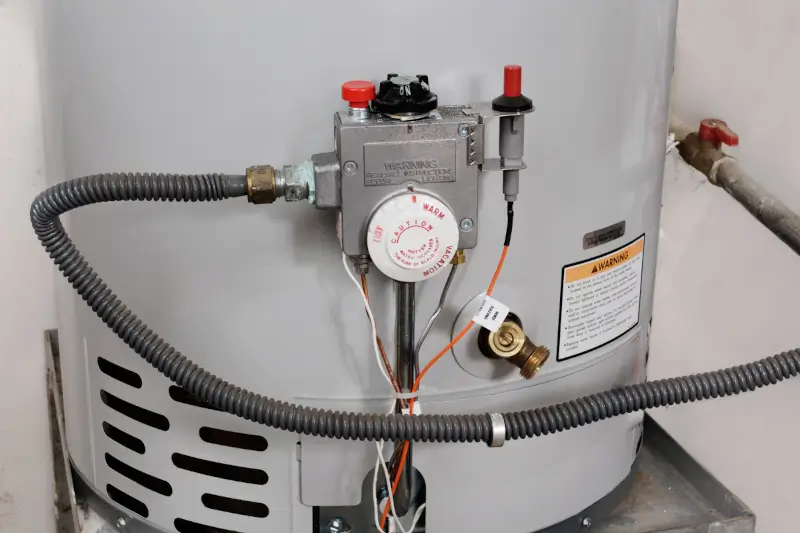
Sometimes the answer is on the front of the tank. The dial or digital control on your water heater decides how hot the stored water gets, and it is regularly nudged, by a previous owner, a well-meaning houseguest, or a vacation setting nobody restored. If showers run consistently lukewarm rather than running out, and the whole house agrees, check the setting before suspecting anything mechanical.
The number to know is 120 degrees Fahrenheit. The Consumer Product Safety Commission’s tap water scald guidance urges households to set water heaters at 120, and the reason is sobering: at 140 degrees, burns occur in about six seconds, and at 150, in two. The safety margin matters most in homes with young children or older adults, whose skin burns faster and who react slower. So the honest advice is a narrow one: if your dial has drifted below 120, restoring it to 120 is a legitimate DIY fix for lukewarm showers.
If someone suggests cranking the dial to 140 to “fix” shower water cold complaints, decline. That treats a capacity or valve problem with a scald hazard, and the real cause is still there under the hotter water.
Cause 5: A Broken Dip Tube
The dip tube is a plastic pipe inside the tank that delivers incoming cold water to the bottom, where the burner or elements heat it, so the hot water drawn from the top stays hot. When the tube cracks or breaks off, incoming cold water dumps in at the top instead, short-circuiting the tank: cold water blends straight into the hot outlet, and you get shower water cold or lukewarm no matter how hard the heater works.
The fingerprint is sudden lukewarmness everywhere at once, often paired with the strangest clue in this guide, small flecks of white or gray plastic caught in faucet aerators and shower heads, which is the old dip tube leaving the building in pieces. Dip tube failure is most common in older tanks, and the repair math is age math: replacing the tube in a five-year-old heater makes sense, while replacing it in a twelve-year-old one usually means paying twice, once for the tube and once for the tank that fails a year later.
Cause 6: The Water Heater Is Failing
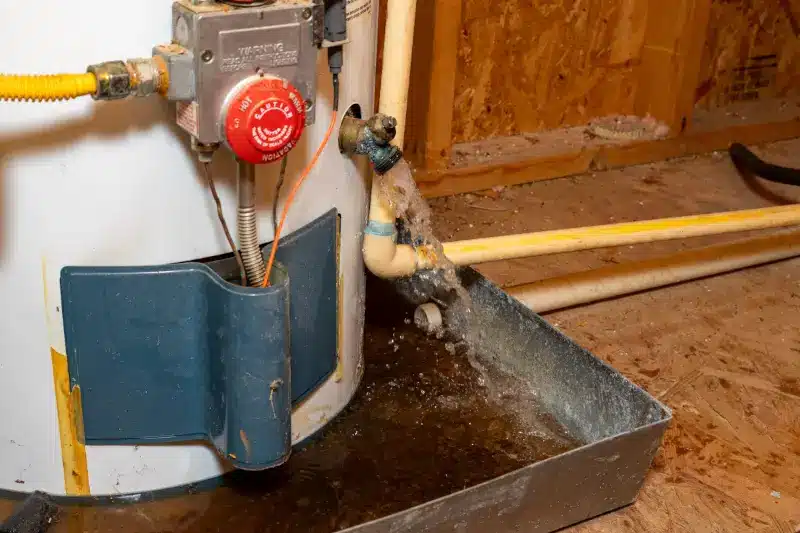
Sometimes shower water cold complaints are the unit announcing retirement. Tanks live roughly 8 to 12 years in our hard water, and the endgame symptoms cluster: a tank that runs out of hot water earlier every month, rusty or discolored hot water, banging and rumbling that a flush no longer quiets, moisture or pooling at the base. Any water on the floor coming from the tank body itself settles the question, since a corroded tank cannot be repaired.
This is where this guide hands off, because diagnosing a struggling heater deserves more than one section. Our complete guide to diagnosing hot water heater problems works through every symptom in detail, and when the verdict points toward replacement rather than repair, our breakdown of water heater installation cost covers the 2026 numbers and the repair-or-replace math so you can decide with real figures instead of a salesman’s.
Match Your Symptoms to the Cause
Here is the whole shower water cold guide compressed into the table we effectively run in our heads on every no hot water in shower call.
Symptom Fingerprint vs. Likely Cause
Why Orange County Showers Go Cold More Than Most
Two of the six causes in this guide, sediment and worn mixing valve cartridges, share a single accelerant: our water. Orange County runs hard, mineral-heavy water, and every mechanism in this guide that involves scale, from the layer at the bottom of the tank to the deposits inside a shower mixing valve cartridge, runs on fast-forward here. A tank that might coast fifteen years in a soft-water state does 8 to 12 here, and cartridges that last a decade elsewhere can start blending badly in five.
The practical takeaways are maintenance-shaped: the annual tank flush matters more here than almost anywhere, and when a shower mixing valve cartridge gets replaced, it is worth asking for a quality replacement rather than the cheapest fit, because the next one buys you years. Neither habit costs much, and together they prevent the two most common repeat offenders behind no hot water in shower calls.
What You Can Check Yourself, and When to Call
The honest DIY list is short and genuinely safe: run the whole-house test from the top of this guide, check the thermostat setting and restore it to 120 if it drifted, stagger heavy use for a week to see whether the house still runs out of hot water, and look for plastic flecks in your aerators. Those four checks identify or eliminate half this guide without tools.
The call-a-plumber list is everything behind tile or inside the tank: shower mixing valve work, because the limit stop and cartridge live behind your shower wall; sediment flushing on an older tank, because of what flushing sometimes uncovers; dip tube replacement; and anything involving gas, venting, or a leaking tank.
The dividing line is simple. When your shower water runs cold and no hot water in shower persists past ten minutes of checking, the diagnostic visit that names the real problem is cheaper than the parts-cannon approach of replacing things until the shower warms up.
Get Your Hot Shower Back
Shower water cold two mornings in a row makes for bad weeks, and every cause in this guide has a known fix. Suburban Plumbing has been finding the real reason behind no hot water in shower calls across Orange County since 2004, from shower mixing valve cartridges to full water heater installation, led by Master Plumber Johnnie Maynard with more than 30 years of personal trade experience. We are California licensed (C-36 License #833520), bonded, and insured, and we quote exact flat-rate prices before any work begins.
Our phones are answered 24/7 with no extra charge for nights, weekends, or emergencies, because a shower water cold emergency does not schedule itself politely either.
Whether the fix turns out to be a $30 cartridge, a tank flush, or a bigger conversation, you will get the honest diagnosis first and the price in writing before anything happens, the same way we handle every call through our plumbing services.
Done With Cold Showers?
Honest diagnosis, flat-rate pricing, and the right fix the first time. Serving all of Orange County 24/7 since 2004.
Cold Shower Questions, Answered
Straight answers to what Orange County homeowners ask when the shower goes cold, from valve mysteries to water heater math.
Why is my shower water cold but my sink water hot?
That pattern points at the shower mixing valve behind your shower wall, not the water heater. Either the anti-scald limit stop is capping how much hot water the handle can deliver, or the internal cartridge has worn out and blends badly. Both are valve repairs, and your water heater is fine.
Why does my shower water go cold after ten minutes?
Usually capacity: a standard tank holds a fixed number of hot gallons, one shower uses about 27, and busy mornings simply outrun the supply. If hot water returns after a recovery period and the problem is worst at peak times, stagger usage first before suspecting the heater of anything.
Why does my shower go cold when someone flushes the toilet?
That is the pressure-balancing function inside your shower mixing valve failing at its one job, which is holding the temperature steady when cold water pressure drops elsewhere. A worn cartridge is the usual culprit, and replacing it restores both steady temperature and scald protection.
What temperature should my water heater be set at?
120 degrees Fahrenheit, the setting the Consumer Product Safety Commission recommends. It is hot enough for comfortable showers and appliances while keeping scald risk low; at 140 degrees, burns can occur in about six seconds. If your dial drifted below 120, restoring it fixes lukewarm showers safely.
Can sediment really make my shower water cold?
Yes. Mineral sediment settles at the bottom of the tank, insulating the water from the burner and occupying gallons the tank should hold, so showers get shorter month after month. Popping or rumbling from the tank is the giveaway, and a professional flush restores capacity when caught in time.
What are the signs of a broken dip tube?
Lukewarm water at every fixture at once, often with small white or gray plastic flecks appearing in faucet aerators and shower heads, which is the failing tube breaking apart. Replacement makes sense on a younger tank; on a unit past ten years, put the money toward the tank instead.
Is it safe to turn up my water heater for hotter showers?
Only to 120 degrees. Above that, scald risk climbs steeply, with burns possible in seconds at 140, and a hotter tank usually masks the real problem rather than fixing it. If 120 still leaves you with no hot water in shower, the cause is capacity, sediment, or the valve, not the setting.
How much does it cost to fix a cold shower?
It ranges from free to a project: staggering usage and a thermostat correction cost nothing, mixing valve cartridge work is a modest repair, flushes and dip tubes sit in the low hundreds, and only a failing tank means replacement money. The diagnosis determines the bill, which is why it comes first.
Why does my hot water run out faster than it used to?
Gradual decline is the sediment signature: buildup shrinks the tank’s usable capacity and slows recovery, so the same household routine that worked for years starts coming up short. A flush recovers a moderately scaled tank, while a badly neglected one may be telling you its age instead.
When should I call a plumber for a cold shower?
After the free checks: the whole-house hot water test, the thermostat setting, and a week of staggered usage. Anything behind tile or inside the tank, including shower mixing valve work, flushing an older tank, and dip tubes, belongs with a licensed plumber, and gas or leaks always do.
Request a Quote Now




Midway City Location
Full Service Plumbing Orange County, CA.
Suburban Plumbing
14933 Adams Street
Midway City, CA 92655
(714) 922-3555
or Send Us an Email Here.
Garden Grove Location
Full Service Plumbing Garden Grove, CA.
Suburban Plumbing
10692 Stanford Ave Unit-E
Garden Grove, CA 92840
(714) 823-8736
or Send Us an Email Here.
Hours & License Info
Both Locations:
Monday-Tuesday: 24 Hours
Wednesday-Saturday: 8am to 5pm
Sunday: Closed
Client Emergency Services Available
California Licensed, Bonded, Insured
C36 Plumbing Contractors License 833520
QUICK LINKS
HOME | PLUMBING SERVICES | PLUMBER NEAR ME | REVIEWS | ABOUT | BLOG | COUPONS | CONTACT | SITE MAP
© 2017-2026 SuburbanPlumbingOC.com
– All rights reserved. –
Information on this website may not be re-used without prior written consent from Suburban Plumbing.